Internal Medicine Residency Curriculum
The Internal Medicine Residency Program fosters resident growth and competence by emphasizing direct patient interaction, thoughtful self-reflection and meaningful feedback.
Rotations
Internal medicine residents rotate through two main hospitals:
Roughly two-thirds of rotations are at SSM Health Saint Louis University Hospital, the program's main teaching hospital.
On July 1, the residency program will transition to a new six-week rotational schedule. This model will feature a 5+1 structure: one week of dedicated continuity clinic, alternating with five weeks of balanced inpatient and outpatient training. On average, residents will have three weeks of inpatient rotations and two weeks of outpatient rotations, in addition to the weekly clinic block.
More information to follow.
Didactics
Morning school is held two to three hours every other week. During this protected time, residents divide into small groups to discuss key clinical topics, professional development and wellness.
This hour-long conference features a number of different learning formats, including:
- Lectures and small group discussions
- How to choose and conduct research
- Chief-led meetings for feedback and updates
- Faculty presentations about challenging cases
- Third-year resident presentations
- Patient safety conferences
- Grand Rounds, which are held every Friday and include a department-wide presentation
Each resident is assigned a coach — a core faculty member or the associate program director. Coaches meet with assigned residents biannually to assess progress, provide guidance and develop a personalized learning plan. They can also advise residents who plan to pursue sub-specialty careers or practice primary care.
Program leaders are committed to helping residents succeed. They meet weekly to discuss program improvements and ways to help each resident thrive.
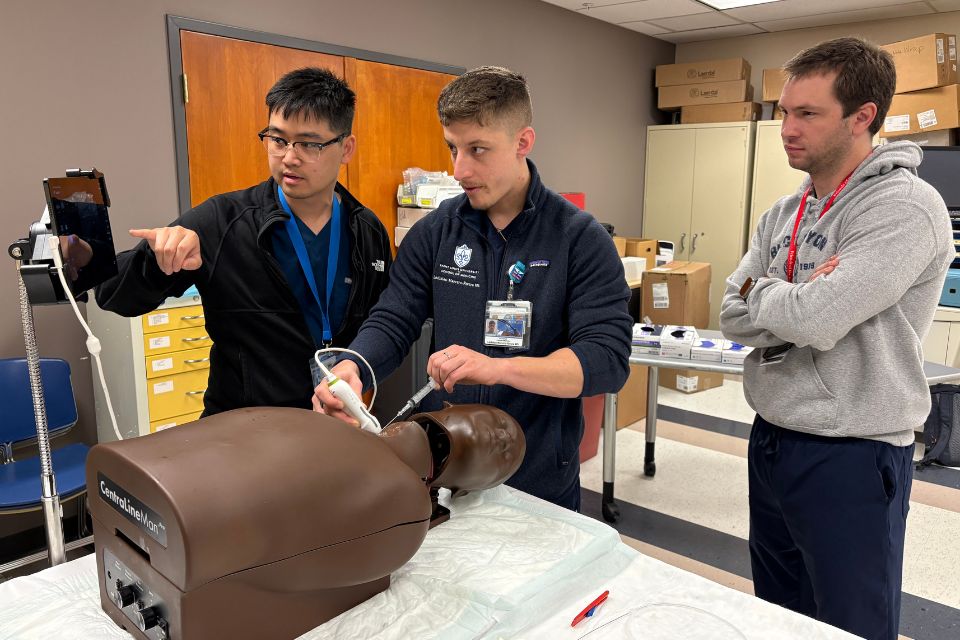
Point-of-Care Ultrasound (POCUS) provides real-time diagnostic information that compliments traditional patient history and physical exams. Because POCUS has a growing importance in clinical practice, the training is now fully integrated into the residency curriculum — a move supported by leading internal medicine societies.
Residents receive comprehensive POCUS education throughout the year, including scheduled didactic sessions, workshops with standardized patient scanning, and bedside and procedural training. All residents have the opportunity and are encouraged to pursue diagnostic POCUS and procedural certifications as part of their professional development.
Training Highlights
- Integrated training throughout residency
- Ready access to handheld and cart-based POCUS devices
- Bedside mentorship and feedback
- Resident-driven, POCUS-focused conferences
- POCUS research and quality improvement projects
- Elective rotations with the Medicine POCUS services
- POCUS certifications