Department of Internal Medicine
Saint Louis University School of Medicine's Department of Internal Medicine has outstanding clinical scholars, state-of-the-art facilities and rapidly expanding research programs. Its physicians and scientists have created a supportive, welcoming culture guided by the Jesuit mission and a love of learning.
A Message From the Chair
Welcome to the Department of Internal Medicine. For over 100 years, we have excelled in patient care, education, research and community service.
Internal medicine is one of the largest departments in the School of Medicine, with 150-plus physicians and scientists who are national and international leaders in vaccine, liver, lupus, kidney and aging research. Our accomplishments are setting the standard for excellence.
Our department is also a leader in undergraduate, graduate and postgraduate medical education. It has 12 specialty divisions and 16 accredited residency and fellowship programs. Our faculty serve as mentors who are dedicated to providing students with guidance and support.
Thank you for your interest in our work.
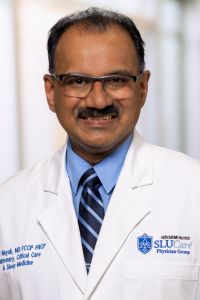
Ravi P. Nayak, M.D.
James B. and Ethel D. Miller Endowed Chair in Internal Medicine
Chair, Department of Internal Medicine
Internal Medicine Graduate Medical Education
The Department of Internal Medicine offers one residency program and an extensive selection of fellowship programs within its 12 subspecialty divisions.
Residency
Fellowships
- Academic/advanced clinical research
- Advanced endoscopy
- Allergy and immunology
- Cardiovascular medicine
- Endocrinology
- Gastroenterology and hepatology
- Geriatric medicine
- Hematology and medical oncology
- Hospice and palliative medicine
- Infectious diseases
- Interventional cardiology
- Nephrology
- Neurogastroenterology and motility
- Pulmonary disease and critical care medicine
- Rheumatology
- Transplant hepatology
The Impact of Internal Medicine Research
Since 2010, department researchers have received funding totaling more than $67 million from the National Institutes of Health (NIH), leading to discoveries and inventions that have had a profound nationwide impact.
Vaccine researchers' substantial contributions have helped save lives and protect the public from viruses such as influenza, herpes and Zika. Researchers have also played a role in the national response to terrorism by rapidly testing potential smallpox vaccines.
Nephrology researchers are leading the nation's efforts to increase the annual number of kidney transplants, including the safe use of kidneys from liver donors. Their research also includes secondary hyperparathyroidism in chronic renal failure and the function of SALL genes in kidney growth.
Geriatric medicine researchers are the nation's leading educators in healthy and vibrant aging. They've studied and developed novel approaches to manage delirium, frailty and Alzheimer's Disease.
Rheumatology researchers have helped develop treatments for lupus, a disabling and often deadly autoimmune disease that disproportionately affects women, particularly African Americans.
The Saint Louis University Liver Center is notable for its research on hepatitis C, with studies exploring how the virus attacks the liver and causes cirrhosis and liver cancer. Researchers have been at the forefront of efforts to study and treat chronic hepatitis C; work that has and will continue to help save hundreds of thousands of lives around the world.
Ignatian Mission in Medicine
In keeping with the University's Jesuit mission, the department's Community Engagement and Collaboration committee creates a culture and climate in which everyone — faculty, staff, medical students, residents and fellows — feels valued, connected, accepted and empowered. Focuses include:
- Mission alignment and promotion
- Education and mentorship
- Leadership engagement and commitment
- Campus and community engagement
- Department recruitment, retention and development
Discover the School of Medicine's Ignatian Mission in Medicine